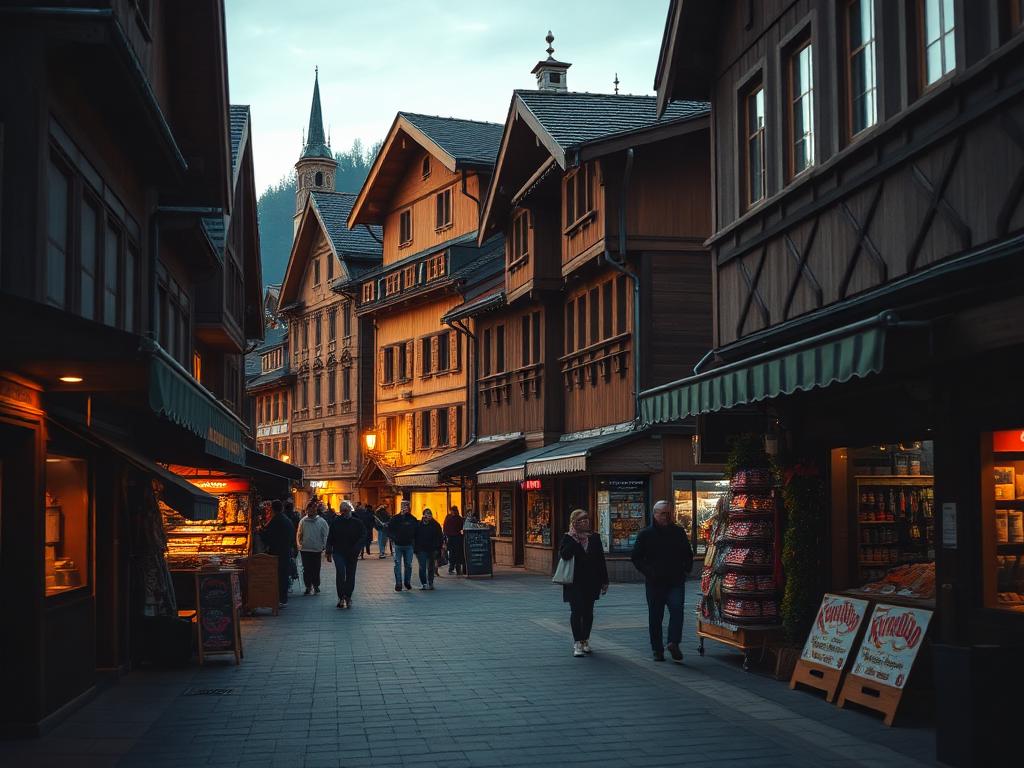
A settlement of iron and sheep
Long before anyone thought to holiday here, the valley beneath the Tatras was a hard place to make a living. The Górale, the highlanders of Podhale, grazed sheep on the upper meadows and moved their flocks with the seasons in a rhythm that had barely changed for centuries. The soil in the valley was thin and cold, better suited to oats and potatoes than to any crop that might make a family rich, and the mountains that now draw millions of visitors were, to the people who actually lived beneath them, mostly an obstacle and a source of danger.
What gave the settlement its first real economic footing was not tourism but iron. In the eighteenth century, ore deposits in the nearby hills fed a forge and ironworks at Kuźnice, whose Polish name literally means the place of the smithies. Charcoal burners worked the surrounding forests, furnaces glowed through the night, and for a while Kuźnice was a genuine industrial hamlet, one of the more improbable outposts of heavy industry in the entire Polish lands. The ironworks eventually declined as richer and more accessible ore deposits were found elsewhere, but the name Kuźnice survives today as the trailhead from which most hikers now set off toward Kasprowy Wierch.
Zakopane itself, in these early centuries, was little more than a loose scattering of wooden farmsteads strung along the valley, administratively insignificant and largely ignored by the courts and chancelleries that ruled over it. It belonged, at various points, to noble estates and later fell under the control of the Habsburg monarchy after the partitions of Poland at the end of the eighteenth century erased the country from the map. For the highlanders themselves, political boundaries mattered less than the practicalities of grazing rights, timber and survival at altitude.
The doctor who invented a destination
The transformation of Zakopane from a farming backwater into something the wider world wanted to visit is inseparable from one man, the physician Tytus Chałubiński. Arriving in the region in the 1870s, Chałubiński was a respected Warsaw doctor who became convinced that the clean mountain air, the exercise of walking in the Tatras and the simple highland diet offered real therapeutic value, particularly for patients suffering from respiratory illness at a time when tuberculosis was a widespread and largely untreatable scourge across Europe.
Chałubiński did not merely recommend Zakopane to his patients from an armchair in the capital. He came here himself, walked the mountains extensively with local guides, and became a tireless promoter of the valley among Warsaw's educated classes. His enthusiasm mattered enormously because he was a man whose opinion carried weight, and soon fellow doctors, patients seeking a cure, and simply the curious began making the long journey south to what had been, within living memory, an obscure shepherding parish that most Poles could not have located on a map.
Alongside the medical argument came something more romantic. Educated visitors from Kraków and Warsaw, arriving in a region still nominally under Austrian rule as part of the province of Galicia, found in the Górale a version of Polishness that felt uncorrupted, defiantly traditional and untouched by the partitions that had divided the nation between three foreign empires. The highlanders, with their distinctive dialect, their sheepskin coats, their fierce independence and their wood carving, became a kind of living symbol of national continuity at a moment when Poland as a state did not officially exist.
Artists, writers and the birth of a legend
Word travelled fast among the artistic and literary circles of Kraków and Warsaw, and by the final decades of the nineteenth century Zakopane had become something like a seasonal colony for Poland's creative class. Painters, poets, composers and playwrights came for the summer, rented rooms from local families, and increasingly began to build houses of their own, drawn by scenery that seemed to answer a hunger for the sublime and by a highland culture that felt like raw material waiting to be recorded and reimagined.
This was the era in which the painter and writer Stanisław Witkiewicz arrived and began to codify what he saw in local carpentry into a self conscious national architectural style, a story substantial enough that it deserves its own chapter. It was also the era of the young Karol Szymanowski, the composer who absorbed highland melodies and rhythms into his own modernist music, and of countless lesser known figures who simply found in Zakopane a place to think, write and escape the more constrained social world of the lowland cities.
The completion of a railway line connecting Zakopane to the rest of the Polish rail network in 1899 turned what had been an arduous journey by horse cart into something manageable within a day, and the effect on the town's growth was immediate and lasting. Guesthouses multiplied, a proper spa infrastructure developed, and Zakopane began to acquire the trappings of a genuine resort town, complete with a promenade culture along what is now Krupówki street, even as the surrounding villages remained recognisably agricultural.
Independence and the winter capital
When Poland regained its independence in 1918 after more than a century of partition, Zakopane found itself perfectly positioned to become a symbol of the reborn nation's confidence and modernity. The interwar decades, the years of the Second Polish Republic, are still remembered locally as something of a golden age. The town hosted the 1929 world student winter games and later bid for and organised major skiing and ski jumping events, and its name became closely associated with winter sport at a time when such pursuits were still a novelty for most Poles.
It was during these years that Zakopane earned its enduring nickname of the winter capital of Poland, a phrase that captured both its literal role as the country's premier centre for skiing, ski jumping and mountaineering, and something more figurative, a sense that this was the place where the new Polish state performed its ambitions of being modern, sporting and European. Government ministers, generals, actors and high society figures from Warsaw kept villas here or made fashionable annual visits, and the town's guesthouses and cafes buzzed with a mixture of mountaineers, convalescents and socialites.
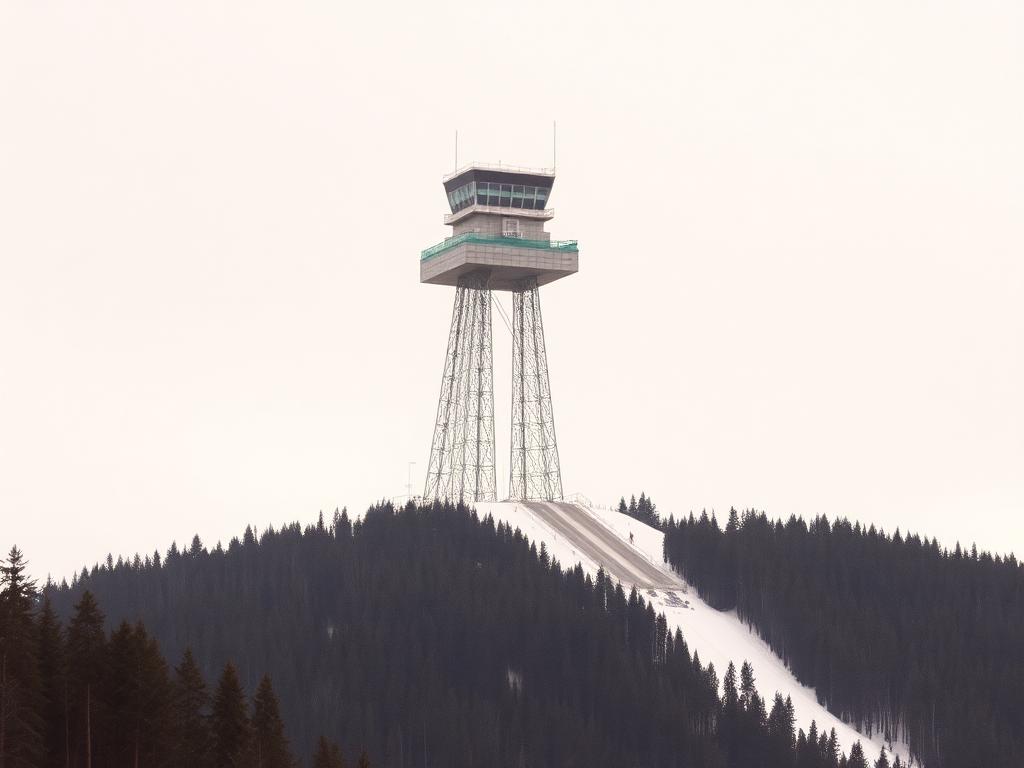
The ski jump at Wielka Krokiew, opened in the 1920s and rebuilt and enlarged many times since, became both a sporting venue and a physical emblem of this era's ambitions, a structure built specifically to put Zakopane and Poland on the map of international winter sport. Even now, when the World Cup ski jumping circuit visits in January, something of that interwar civic pride is still visible in how the whole town turns out for it.
War, occupation and survival
The Second World War brought a brutal interruption. Nazi Germany occupied the region from 1939, and the Tatras, ironically, became a corridor for one of the more remarkable clandestine operations of the occupation, as Polish and other couriers used the high mountain passes to smuggle people, information and eventually escaping soldiers and airmen across the border into then neutral Hungary and Slovakia. Highland guides who knew the passes intimately, sometimes at extraordinary personal risk, became essential to this network.
The occupation years were also marked by grim complexity, since some elements of local Górale identity were exploited by German racial theorists who tried, with limited and largely rejected success, to promote the idea that highlanders were ethnically distinct from other Poles, a divisive scheme that most Górale themselves refused to embrace. Resistance activity continued throughout the war in the surrounding forests and mountains, and Zakopane, like the rest of occupied Poland, endured requisitions, deportations and genuine hardship before liberation arrived in 1945.
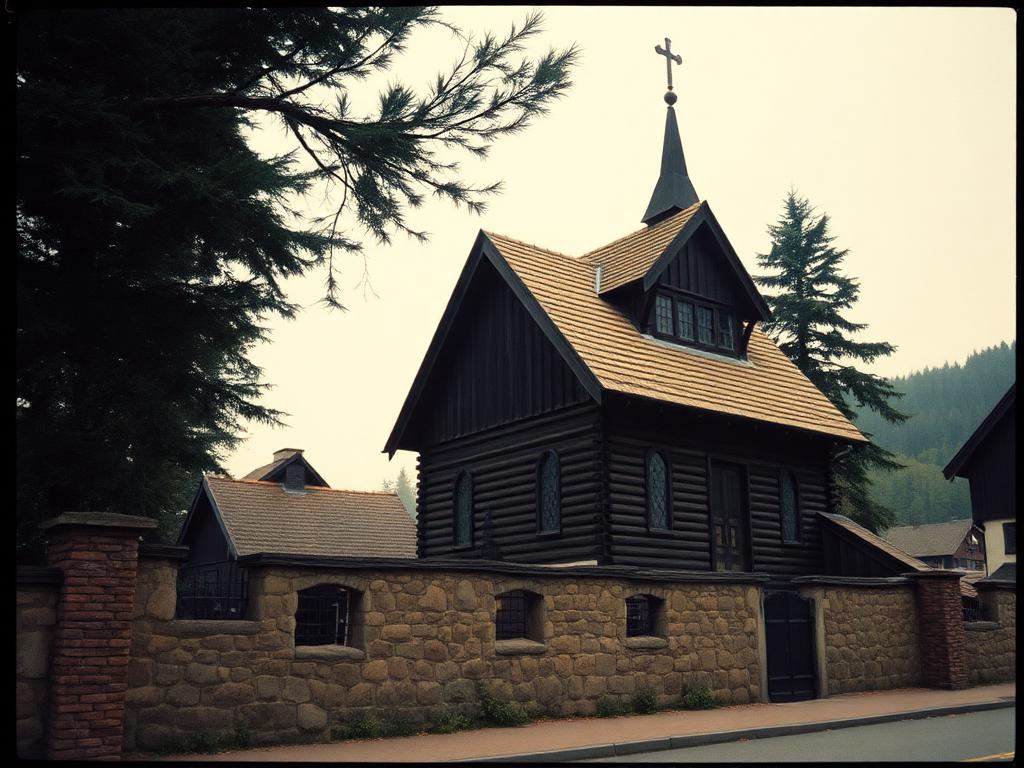
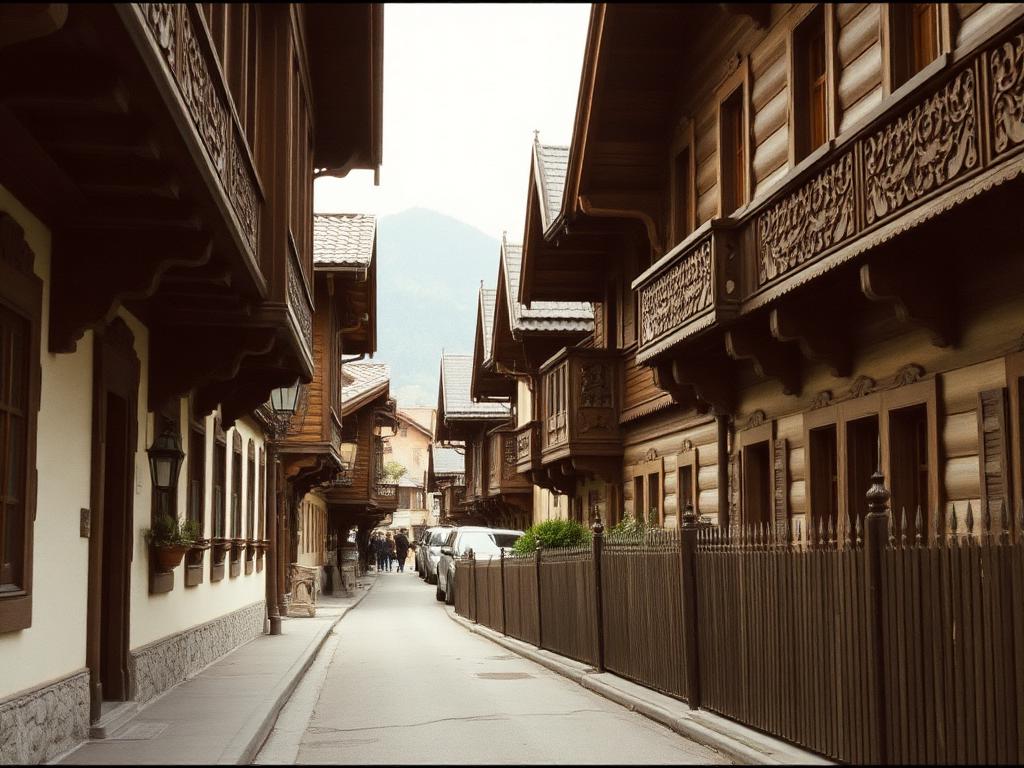
The physical fabric of the town survived the war relatively intact compared with the devastation visited on cities like Warsaw, which meant that when peace returned, Zakopane's wooden villas, its church, and its distinctive streetscape remained largely as they had been, a rare continuity in a country that had lost so much of its built heritage in the preceding six years.
Communism, resorts for the masses and a name that endured
Under the communist Polish People's Republic after 1945, Zakopane's character shifted again. The private villas and boarding houses of the interwar bourgeoisie gave way, gradually, to state run sanatoria, workplace holiday homes and youth hostels, as the new authorities embraced the idea that mountain recreation should belong to workers and families rather than a wealthy elite. Enormous numbers of ordinary Poles experienced their first taste of the mountains through subsidised group holidays organised through their factories or trade unions.
This period of mass domestic tourism left its own visible legacy in the shape of some fairly unlovely concrete hotels and sanatoria that still stand today alongside the wooden villas, an architectural reminder that Zakopane's history is not a single continuous story of alpine charm but a layered one, with some layers considerably less picturesque than others. Even so, skiing infrastructure expanded during these decades, including improvements to the cable car up Kasprowy Wierch, and the town's identity as the premier Polish mountain destination never really weakened.
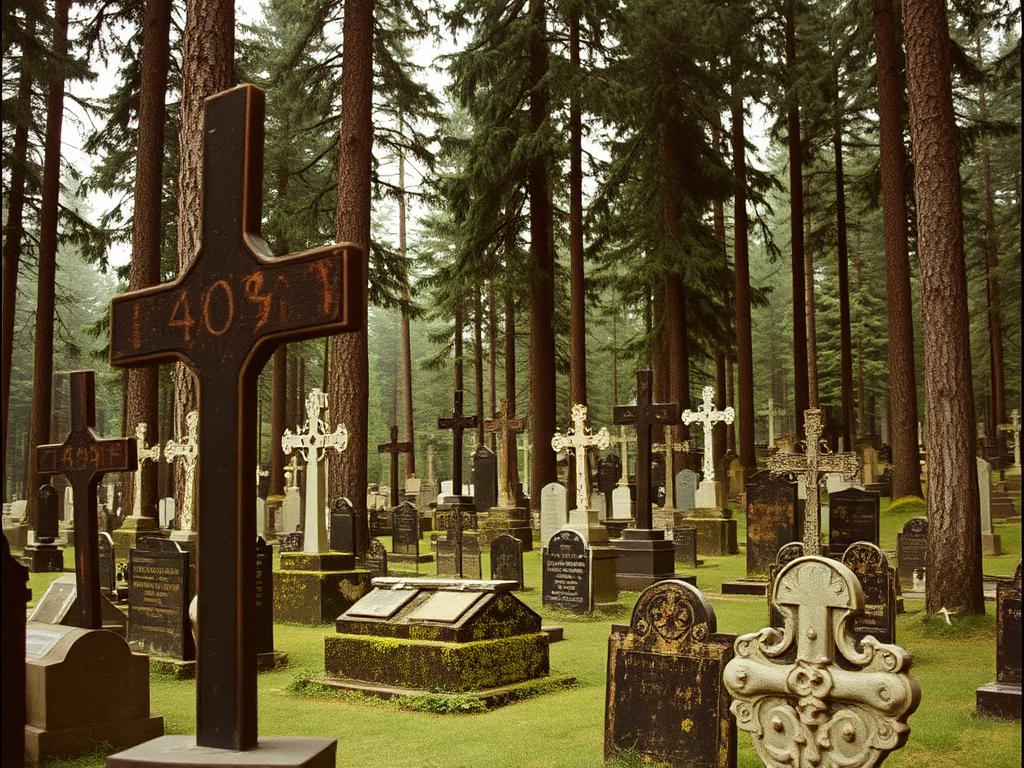
Through it all, one place has remained a quiet anchor for the town's memory, the small wooden cemetery known as Pęksowy Brzyzek beside the old church on Kościeliska street. Tytus Chałubiński himself is buried there, along with Stanisław Witkiewicz's collaborators, celebrated highland guides, folk artists and writers who shaped the town's identity over a century and a half. Walking among its modest, often beautifully carved wooden and stone grave markers gives a visitor a more intimate sense of Zakopane's layered history than almost anything else in town.
Zakopane today, between crowds and identity
Since the fall of communism in 1989 and Poland's subsequent integration into a market economy and eventually the European Union, Zakopane has experienced a tourism boom of an entirely different scale from anything in its earlier history. Krupówki street, once a modest promenade, now throngs year round with domestic and increasingly international visitors, and the surrounding villages have filled with guesthouses, thermal spa complexes and holiday apartments built to meet demand that shows little sign of slackening.
This growth has brought real prosperity to a region that was, for most of its history, genuinely poor, but it has also generated an ongoing local conversation, sometimes an anxious one, about identity, overdevelopment and what is lost when a place built on the romance of highland authenticity becomes primarily an engine for hospitality revenue. Local voices, including Górale cultural associations, actively work to keep dialect, music, dress and craft traditions alive rather than merely performed for visitors, a tension that any thoughtful traveller can sense just beneath the surface of a shopping street selling oscypek cheese and highland trinkets.
What has not changed is Zakopane's place in the Polish national imagination. It remains, for most Poles, the mountains, a shorthand for escape, clean air and a particular vision of rugged national character that Chałubiński's generation first articulated a century and a half ago. Understanding that layered history, the doctors and consumptives, the artists and ironworkers, the smugglers and skiers, makes the wooden gables and the crowded pavements of today's town considerably easier to read.
Fun factPęksowy Brzyzek's wooden grave markers, many carved by local folk artists, are themselves considered a living gallery of the Zakopane style applied to something as humble as a tombstone.