A landscape that invites stories
Long before anyone measured the Tatras in metres or marked their trails with paint, the people who lived beneath them had to explain them some other way. Sudden storms that could kill a shepherd caught on an open ridge, avalanches that erased whole slopes of forest overnight, caves that swallowed sound and light within a few steps of their mouths: none of this needed scientific explanation to be survived, but it did need some kind of meaning, and meaning is exactly what legend supplies. The folklore of Podhale grew directly out of a working relationship with a genuinely dangerous mountain range, not out of idle fancy, and that origin still gives it a certain seriousness even today.
It is worth saying clearly at the outset that this chapter moves between two different kinds of truth. Some of what follows is documented history: real people, real religious devotion, real events that can be checked against records. Other parts are legend in the strict sense, stories that were never meant to be taken as literal fact even by the people who told them, but that carried real cultural weight regardless. Podhale itself has never been especially troubled by keeping these two categories separate in daily life, and a visitor who wants to understand the region honestly should learn to hold both at once without collapsing one into the other.
The sleeping knights of Giewont
Giewont, the mountain whose silhouette dominates every view north from Zakopane and is often described as resembling a sleeping figure, carries the region's most famous legend. According to the story, an army of knights lies asleep inside the mountain, waiting for the moment when Poland faces its gravest peril, at which point they will wake, ride out and save the nation. It is a variant of a very old European folk motif, the same basic idea appears attached to mountains and hills across the continent, but in Podhale it has fused so completely with the shape and presence of Giewont that the mountain and the story feel inseparable.
The legend is pure folklore, with no historical event behind it, but its emotional logic is easy to understand once you have actually seen the mountain's outline from the town below, arms and torso and head laid out along the ridge with an eerie human clarity, especially at dusk or under snow. Generations of highlanders looked up at that shape every day of their working lives, and it is not hard to see why they populated it with sleepers rather than simply calling it a coincidence of erosion.
The large steel cross that stands on Giewont's summit today is real and historical, erected in the closing years of the nineteenth century and maintained since, a genuine object of pilgrimage as much as a mountaineering destination. It sits slightly apart from the sleeping knights story rather than being part of it, a Christian marker placed on a peak that folklore had already made significant, and climbing to it during a lightning storm has caused real, documented deaths over the years, since the exposed metal cross on an open ridge is a natural lightning target. The mountain, in other words, has earned its aura of danger honestly, quite apart from any legend attached to it.
Janosik and the zbójnicy: outlaws turned into folk heroes
Juraj Jánošík was a real person, a Slovak highland outlaw executed in the early eighteenth century, whose actual documented career as a robber was comparatively brief and considerably less romantic than the legend that grew around him on both sides of the Tatras. In Polish and Slovak folk memory alike he was transformed over the following centuries into something closer to a mountain Robin Hood, a bandit who supposedly stole from wealthy landowners and merchants and shared the proceeds with poor highland villages, defying the noble estates and the tax collectors who ground down subsistence farmers.
Whatever the historical Jánošík actually did, the zbójnicy, the wider tradition of highland outlaw bands he came to represent, were a genuine feature of life in the Tatra foothills for a long stretch of history, groups of men who lived partly outside the law in the forests and high valleys, sometimes robbing travellers and estates, sometimes simply evading feudal obligations that a subsistence economy could not sustain. Poverty and a harsh, unforgiving legal order pushed some highlanders toward this life, and the communities they came from did not always see them as criminals, which is part of why the folklore that followed was so forgiving of them.
That folklore is kept alive today most visibly in the zbójnicki dance, a vigorous, athletic folk dance performed with small ceremonial axes called ciupagi, still taught and performed by highland folk ensembles in Zakopane and across Podhale. The dance is theatrical rather than a literal reenactment of banditry, full of leaps, axe work and a swaggering bravado, but it functions as a living monument to the outlaw tradition in a way no statue could, since it is passed down through bodies and practice rather than through stone.
Mountain spirits and the shepherd's reading of the weather
Beyond named legends like Giewont and Jánošík, Podhale folk belief included a whole ecology of lesser spirits and superstitions tied closely to the practical dangers of pastoral life. Shepherds spending entire summers alone or in small groups at high mountain huts developed a rich vocabulary of omens: certain cloud formations over specific peaks meant a storm was building fast enough to bring the flock down immediately, unusual animal behaviour was read as a warning, and particular caves and rock formations were treated with a wariness that mixed genuine caution about rockfall and disorientation with older stories about spirits or malevolent forces said to inhabit them.
Much of what looks like superstition from the outside was, in practice, an oral system for transmitting hard won survival knowledge in a society with limited written record keeping. A story that a certain gully was home to something unnatural was also, functionally, a warning to avoid a gully that had claimed lives to avalanche or rockfall in the past. Folklore and practical mountain craft were woven together tightly enough that separating them fully would have made no sense to the people who held both at once, and in many ways this is still true of highland attitudes to weather and danger today, expressed now in more secular terms but carrying the same underlying respect.
Treasure, caves and the lure of what lies underground
The Tatras hold a genuine network of limestone caves, particularly around Dolina Kościeliska, and caves of this kind have attracted treasure legends in mountain cultures worldwide, Podhale included. Stories circulated for generations about hidden gold, about robber bands or even supernatural guardians concealing wealth deep within specific caverns, and treasure hunters, some earnest and some clearly opportunistic, have periodically searched these systems since at least the nineteenth century, occasionally leaving behind old digging marks and equipment that only add to the caves' mystique for later visitors.
No documented treasure has ever actually been recovered from these legends, and most historians treat the stories as a natural byproduct of caves being dark, difficult to fully explore and genuinely unsettling to stand inside, conditions that reliably generate this kind of folklore anywhere in the world. What is real is the geology itself, the caves of Dolina Kościeliska are among the most significant in Poland, and walking near their entrances today, several of which are open to visitors on marked routes, gives an honest sense of why they seemed like plausible hiding places for something valuable and half forgotten.
Faith old and new, side by side
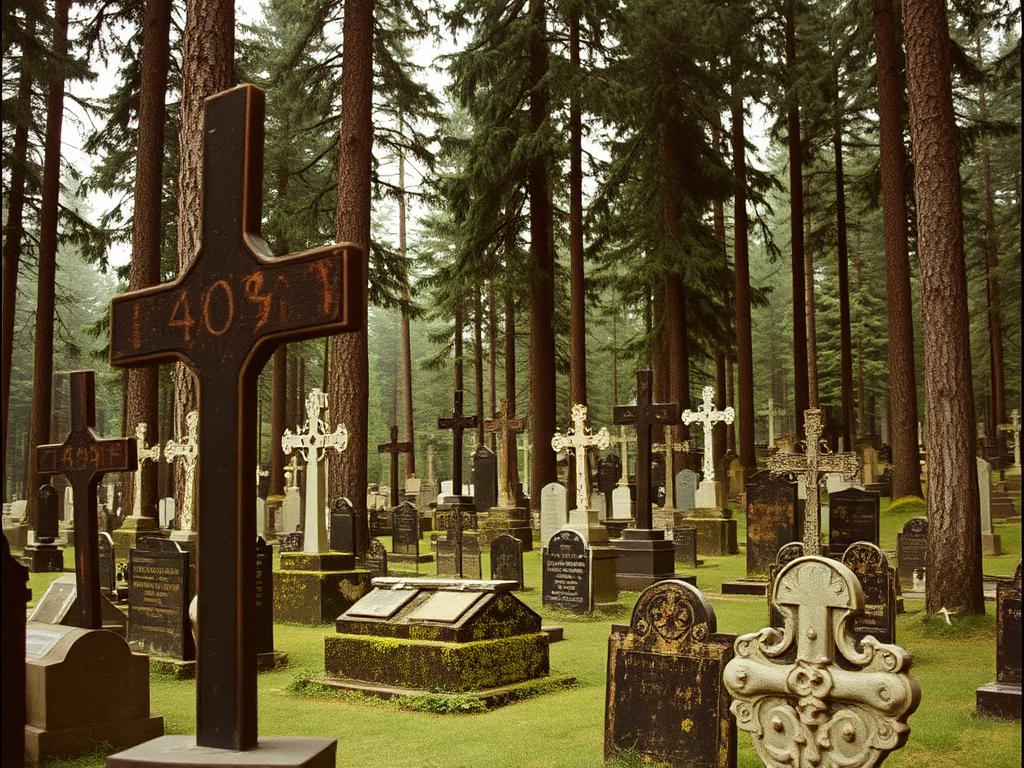
Podhale is devoutly Catholic, and has been for centuries, but its Catholicism absorbed rather than erased the older folk beliefs that predated it, producing a religious culture that can feel, to an outside observer, unusually comfortable holding both at once. Wayside shrines, crosses and small chapels dot the roadsides and field edges throughout the region, many of them older than living memory, erected historically as much for protection against misfortune, illness or bad weather as for pure devotion in the abstract theological sense. Passing highlanders would traditionally remove their hats or pause briefly at these markers, a habit that persists in some form among older residents today.
This blending is visible in the way local saints, feast days and mountain landmarks are woven together in the popular imagination. The cross on Giewont sits above a mountain already thick with older legend rather than replacing it. Blessing of animals, harvest and pasture, rituals with roots stretching back before written Christian practice arrived in the highlands, continued for generations within a fully Catholic framework, the highlanders never seeing much contradiction in asking both old and new forms of protection for the same flock.
The Sanctuary at Krzeptówki and the memory of John Paul II
The most significant recent chapter in Podhale's religious life is entirely historical rather than legendary: the deep and lasting bond between this region and Pope John Paul II, born Karol Wojtyła, who as a young priest and later as pope was known to love the Tatras, hiking and skiing in the mountains around Zakopane on numerous occasions before his elevation to the papacy made such visits impossible. That personal connection between a beloved Polish pope and this specific landscape is one of the most genuinely felt threads running through the town's modern identity.
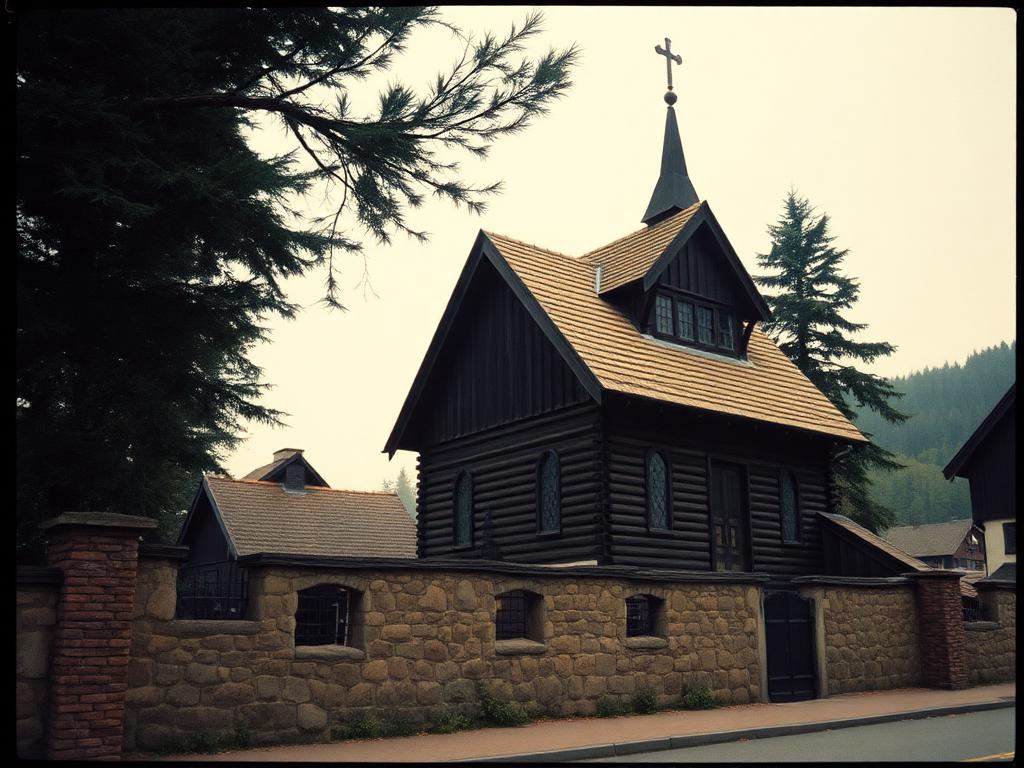
The Sanctuary of Our Lady of Fatima at Krzeptówki was built in the decades following an assassination attempt on John Paul II in 1981, conceived partly as an act of thanksgiving for his survival, and it has since become a major site of pilgrimage in its own right, drawing visitors well beyond Podhale. Local highlander craftsmanship, wood carving and folk architectural style are built into the sanctuary's design, making it as much an expression of regional identity as of Catholic devotion generally, a place where the two threads of this chapter, mountain culture and religious faith, meet in a way that is entirely real rather than legendary.
Songs, storytelling and knowledge passed by voice
Before literacy was widespread in the Podhale countryside, and to a real extent even after, songs and spoken storytelling carried the region's history, its practical knowledge and its moral instruction all at once. The distinctive nasal, high pitched singing style of highland folk music, still performed by ensembles in Zakopane's karczmy and at folk festivals, is not simply decorative, its lyrics often encode local history, family lineages, humour at the expense of neighbouring villages, and warnings about the mountains dressed as narrative rather than instruction.
This oral tradition is one reason the region's folklore has stayed unusually alive rather than fossilising into museum material. Ensembles like the well known groups still active in Podhale today learn material directly from older performers rather than solely from written transcription, and children in highland families still sometimes grow up hearing the same songs and the same handful of core legends, Giewont's knights, the zbójnicy, in more or less the form their grandparents heard them. It is a living inheritance rather than a preserved one, which is a meaningfully different thing.
Feeling it for yourself, at dusk in a quiet valley
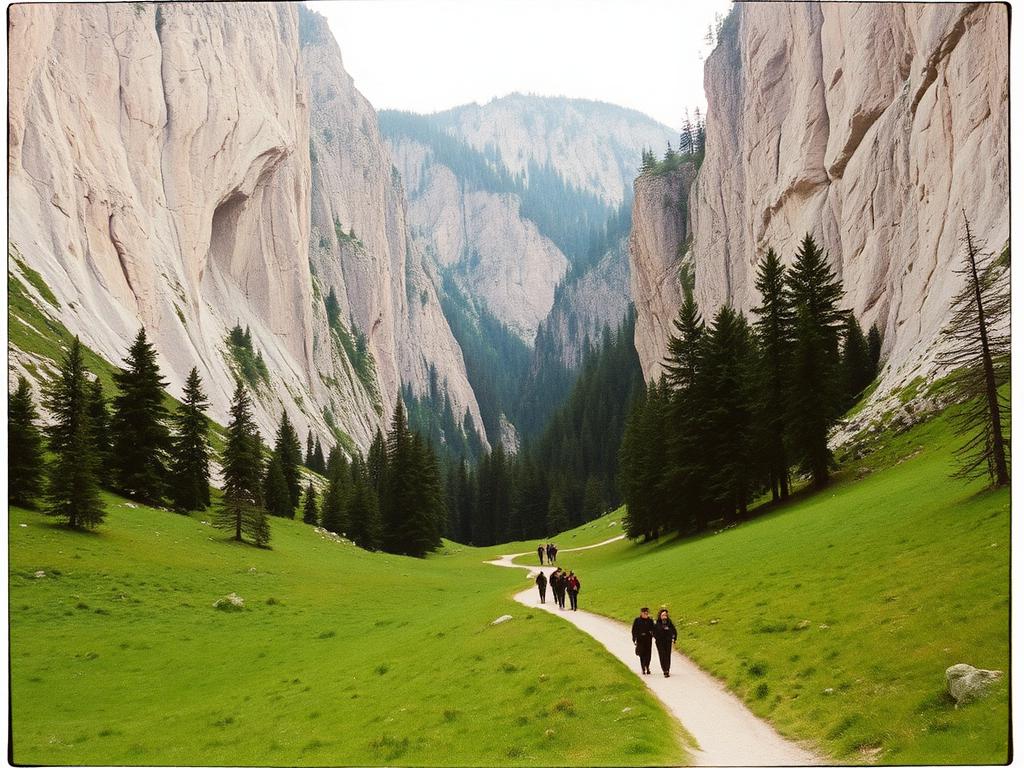
None of this folklore requires belief to be worth encountering, and most highlanders today would not claim to believe literally in sleeping knights or cave treasure any more than anyone else in modern Poland. But there are moments, walking a quiet stretch of Dolina Kościeliska or Dolina Chochołowska as the light drops and the temperature falls and the forest sounds change, when the old stories stop feeling like curiosities and start feeling like a reasonable description of the mood in the air. That is not mysticism, it is simply what centuries of people noticing the same shadows and the same sudden cold have left behind in the culture.
A visitor who wants a genuine feel for this side of Zakopane does not need a guided ghost tour or a staged performance, though those exist and can be enjoyable enough. It is enough to walk one of the valleys in the late afternoon rather than at midday, to notice the wayside crosses rather than walk past them, and to ask, in a karczma with live music, what the words of a particular song actually mean. Podhale's storytellers are, on the whole, glad to be asked, and the answer usually turns out to connect, sooner or later, back to the mountains standing just outside the window.
Fun factThe steel cross on Giewont's summit is a genuine lightning hazard in storms, and its documented danger has, if anything, deepened rather than dispelled the mountain's old reputation as a place where the ordinary rules do not quite apply.